Gum Disease Treatment in North Dallas, TX
Gentle, effective care for gum disease, from early gingivitis to advanced periodontitis, caught and treated before it causes lasting damage.
Medically reviewed by Dr. Nicole Houshmand, DDS · Updated June 2026
- Gums that bleed when brushing or flossing
- Persistent bad breath that does not resolve with brushing
- Gums that look red, swollen, or are pulling away from teeth
- Patients who have been told they have deep pockets at a previous exam
Gum disease affects nearly half of adults over 30, and most don’t know they have it because early stages are painless. Caught at the gingivitis stage, it is completely reversible with a professional cleaning and better home care. More advanced cases require a deep cleaning (scaling and root planing), and some need ongoing maintenance every three months. Most PPO plans cover periodontal treatment.
Can gum disease be reversed, and what does treatment involve?
Nearly half of adults over age 30 have some form of gum disease (periodontal disease), yet many don't know it because early stages are painless. Left untreated, gum disease leads to bone loss, tooth loss, and has been linked to systemic health conditions including heart disease and diabetes. Caught early, it is very manageable, often without surgery.
What to expect
Periodontal evaluation
We measure pocket depths around every tooth, assess bone levels on X-rays, and determine the stage and severity of any gum disease.
Non-surgical treatment (scaling & root planing)
A thorough deep cleaning removes tartar and bacteria from below the gum line, performed comfortably under local anesthesia.
Irrigation & antibiotics
For more active infections, we may apply antibiotic gel directly into periodontal pockets after cleaning to reduce bacteria.
Maintenance program
Gum disease is a chronic condition managed with consistent care. Maintenance cleanings every 3–4 months keep the disease controlled.
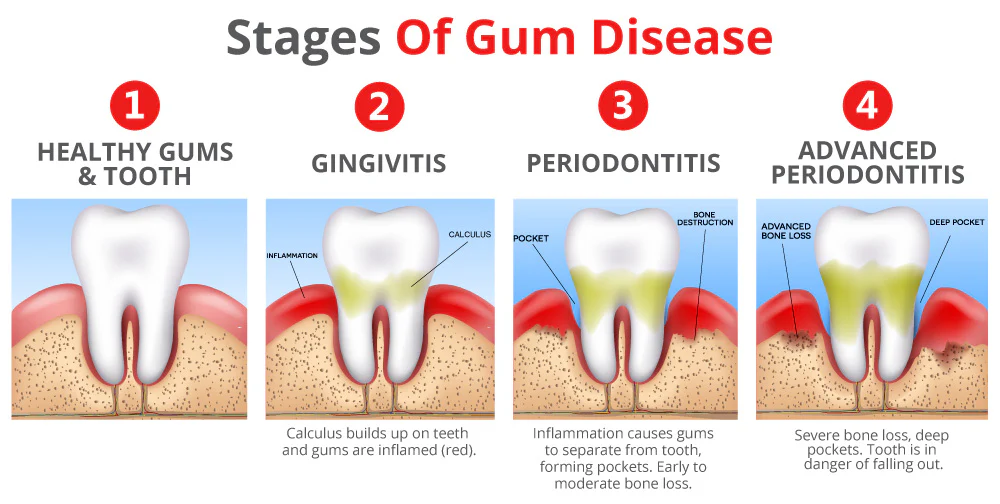
| Stage | Signs | Treatment | Reversible? |
|---|---|---|---|
| Gingivitis | Bleeding when brushing; mild gum redness; no bone loss | Professional cleaning + improved home care | Yes, fully reversible |
| Mild periodontitis | Pockets 4–5 mm; beginning bone loss | Deep cleaning (scaling & root planing) | Controllable with ongoing maintenance |
| Moderate periodontitis | Pockets 5–7 mm; significant bone loss | Deep cleaning + quarterly maintenance visits | Stabilizable; not fully reversible |
| Advanced periodontitis | Pockets 7 mm+; tooth mobility; severe bone loss | Periodontal surgery or referral; possible extractions | Managed to prevent further loss |
“Dr. Aletaha and her friendly professional staff have provided my dental care for over 5 years. Her warm, caring and patient demeanor takes the worry and anxiety out of going to the dentist. They allow time to answer all your questions. This is an easy five star review.”
Frequently asked questions
Early signs include bleeding when brushing or flossing, red or swollen gums, and persistent bad breath. As the disease progresses: receding gums, sensitivity, loose teeth, and pain when chewing. Many patients have no obvious pain in early stages, which is why regular checkups are essential.
Gingivitis, the earliest stage, is completely reversible with a professional cleaning and improved home care. Periodontitis (more advanced disease with bone loss) cannot be fully reversed, but it can be arrested and managed with regular deep cleaning (scaling and root planing) and maintenance cleanings every 3–4 months.
A deep cleaning goes below the gum line to remove tartar and bacteria from the root surface where regular cleanings cannot reach. It's typically done in two appointments, one side of the mouth at a time, under local anesthesia for comfort. Most patients are surprised by how manageable it is.
Most cases of mild-to-moderate gum disease can be treated non-surgically with scaling and root planing followed by consistent maintenance visits. Surgery is typically only considered for severe cases where non-surgical treatment hasn't achieved adequate control. We always start with the least invasive approach.
Patients with gum disease typically need maintenance cleanings every 3–4 months rather than every 6 months. This schedule keeps bacterial levels below the threshold that causes further damage and gives us regular opportunities to monitor your gum health.