Dental Crowns & Bridges in North Dallas, TX
Restore damaged or missing teeth with durable, natural-looking porcelain restorations.
Medically reviewed by Dr. Shokooh Aletaha, DDS · Updated June 2026
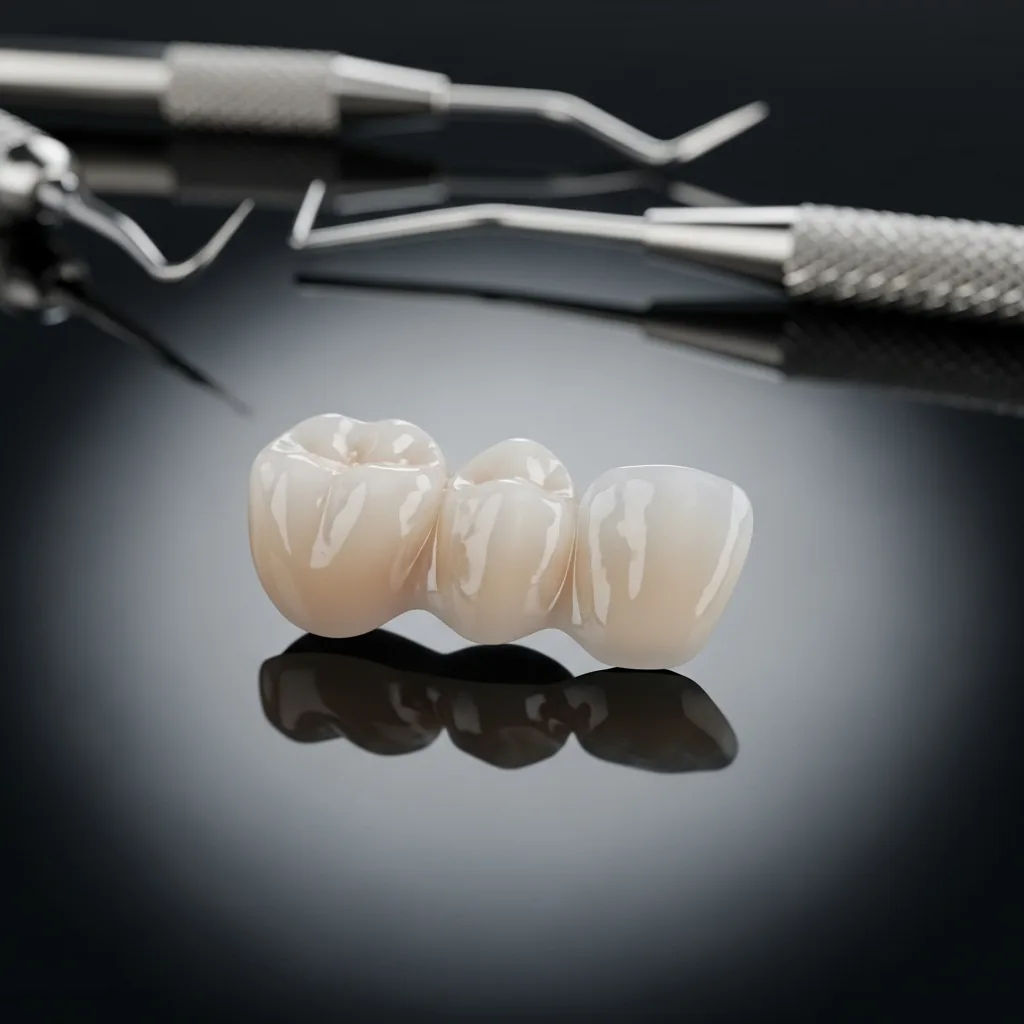
A dental crown is a porcelain cap fitted over a damaged tooth to restore its shape, strength, and appearance. Most crowns last 10–15 years. A bridge uses two crowns to replace a missing tooth without an implant. We use digital impressions, no messy molds, and match the restoration to your surrounding teeth. Cost: $1,200–$2,000 per crown; most PPO plans cover around 50%.
What is a dental crown, and when do you need one?
A dental crown is a custom-fitted cap placed over a damaged, decayed, or weakened tooth to restore its shape, strength, and appearance. A bridge uses two crowns anchored to neighboring teeth to fill the gap left by a missing tooth. Both are made from tooth-colored porcelain and matched to your surrounding teeth so seamlessly that nobody will know.
- Severely decayed or cracked teeth that cannot be restored with a filling
- Teeth after root canal therapy that need protection
- Missing teeth where a fixed bridge is preferred over an implant
- Teeth with large existing restorations that have failed
What to expect
Assessment & planning
We evaluate the tooth, take X-rays, and determine whether a crown, bridge, or alternative treatment is the best approach.
Tooth preparation
The tooth is gently shaped under local anesthesia. A digital impression is taken and a temporary crown is placed.
Crown fabrication
Your custom crown is made by a skilled dental lab over 1–2 weeks to match your exact tooth shape and color.
Final placement
The permanent crown is bonded and your bite is adjusted. You leave with a restored tooth that looks and feels completely natural.
What are the signs you need a crown or bridge?
Cracked or fractured tooth
A crown protects a cracked tooth from splitting further and restores full biting force. Waiting makes the crack worse, and extraction more likely.
Large or failing filling
When decay or an old filling has weakened more than half the tooth structure, a crown is more reliable than another filling.
Missing tooth
A dental bridge replaces a missing tooth using the adjacent teeth as anchors. Unlike an implant, no surgery is required, it can often be completed in two appointments.
After root canal therapy
A tooth that has had a root canal is more brittle and susceptible to fracture. A crown placed over it can last for decades.
| Crown | Bridge | Implant | |
|---|---|---|---|
| What it does | Caps and protects a damaged existing tooth | Replaces a missing tooth using adjacent teeth as anchors | Replaces a missing tooth with a new root and crown |
| Affects neighboring teeth? | No, single tooth only | Yes, two teeth must be crowned | No |
| Preserves jawbone? | N/A (tooth root remains) | No, bone loss continues under bridge | Yes, implant stimulates bone |
| Lifespan | 10–15 years | 10–15 years | 20+ years |
| Typical cost (Dallas) | $1,200–$2,000 | $2,500–$5,000 (3-unit) | $3,500–$6,000 |
| PPO coverage | ~50% typical | ~50% typical | Partial (varies by plan) |
“They listen to your concerns and follow through with a suggested plan. The price schedule is fair and they will set up payment plans as needed. Tooth bonding work is excellent. Crown work is precise. They do Invisalign plans too.”
Frequently asked questions
A crown is typically recommended when a tooth has a fracture or crack that can't be fixed with a filling, when more than 50% of the tooth's natural structure is damaged or decayed, after a root canal to protect the weakened tooth, or to anchor a dental bridge. We'll tell you clearly if a crown is necessary or if a less invasive option will work.
Crown placement typically requires two appointments: one to prepare the tooth and take impressions, and a second to seat the permanent crown. The time between appointments is usually 1–2 weeks while the crown is custom-fabricated by our dental lab.
Yes. Modern porcelain crowns are excellent at mimicking natural tooth enamel, including translucency and shading. We match the crown to your adjacent teeth so it blends seamlessly.
Most porcelain crowns last 10–20 years with proper care. The most common reason for replacement is recurrent decay at the margin or gum recession. Good brushing and flossing habits, especially at the gum line, significantly extend crown longevity.
The preparation appointment is performed under local anesthesia and is comfortable. Some sensitivity in the days following preparation is normal. Sedation is available for anxious patients.